
Trends in Higher Education Technology
An Integrator’s Guide
Budgets are flat. Expectations are not.
The world has gone hybrid. Technology advances rapidly and continues to reshape expectations of what seamless connection should feel like. Naturally, students assume their campus experience will deliver exactly that. For institutions and the integrators that serve them, the stakes and the opportunity are significant: By 2025, U.S. colleges and universities are expected to spend nearly $27 billion on AV.
To move from one-off installs to trusted campus-wide standards, you need more than gear; you need to understand the direction things are moving. These trends reveal what’s shifting, what’s sticking, and how to design AV experiences that simplify support, scale across learning spaces, and earn long-term trust from higher ed IT teams.
1. Modernization Without Overhaul
Campus IT teams are under pressure to modernize, but a complete system overhaul is most likely not a realistic option. Instead, winning solutions work within existing infrastructure—dropping into current setups while eliminating logins, dongles, and training requirements.
Faculty expect walk-in-and-teach simplicity: no apps, no adapters, no day-one confusion. For integrators, that’s a call to design AV systems that fit seamlessly into existing environments, not just function properly.
2. BYOD and Interop Are the New Standard
Bring Your Own Device (BYOD) has moved from trend to expectation. Students and faculty want native, app-free screen sharing across Windows, macOS, iOS, Android, and ChromeOS.
At the same time, unified communications platforms are finally playing nice:
- Microsoft Teams Rooms can join Zoom and Webex via Direct Guest Join
- Zoom Rooms can join Google Meet
- Google Meet hardware connects with Zoom and Webex
- Cisco devices integrate with Microsoft Teams
This seamless connectivity eliminates the frustration of platforms that don’t talk to each other and removes the technical hurdles that disrupt learning.
For integrators, building solutions that bridge all major platforms means your AV systems adapt with changing campus needs rather than becoming obsolete.
3. Hybrid Learning Is Here to Stay
According to Gartner research, 60% of institutions will adopt a hybrid model by 2027, mixing physical and virtual delivery to serve diverse student and faculty needs.
This shift demands AV systems that handle multiple scenarios seamlessly: traditional classroom instruction, remote guest lectures, faculty teaching from different campus locations, and students presenting from their own devices.
The challenge for integrators is ensuring consistent audio quality for remote participants, intuitive switching between input sources, and reliable connectivity that works with both local and cloud-based collaboration tools.
Success means creating learning environments where the technology becomes invisible, allowing educators to focus entirely on instruction rather than troubleshooting.
4. The First Ten Minutes Rule
The most common classroom tech failure? It’s not dead displays: It’s friction. Login prompts. Dongle drama. Confusing app sequences.
These kill momentum and flood the help desk. Integrators who design frictionless, app-free experiences reclaim those crucial first minutes of every class.
5. Centralized Management and Data Matter More
Modern AV ecosystems are no longer just hardware; they are data platforms. The ability to monitor room health, firmware status, and usage across hundreds of devices enables IT to move from firefighting to proactive support.
ScreenBeam’s Central Management System Enterprise (CMS) gives integrators and IT teams a clear path to campus-wide control: manage profiles, push updates, monitor receiver health, and ensure uptime from one dashboard. With role-based access and scalability to thousands of devices, CMS helps higher ed IT teams stay ahead of issues and keep learning spaces running smoothly.
6. Standardize the Experience, Not the Gear
From lecture halls to breakout rooms, institutions want consistency. That means creating platform-agnostic environments that preserve existing control systems while delivering a predictable user experience. Integrators who help standardize across diverse room types will earn long-term trust and long-term contracts.
Where ScreenBeam Fits
ScreenBeam is purpose-built for higher education’s next chapter. It delivers what IT, faculty, and integrators need:
- App-free, platform-agnostic wireless display
- Seamless conferencing interop with Teams, Zoom, and Google Meet
- Centralized management across hundreds of rooms
- Secure, scalable design aligned with IT policy
Explore Featured Products
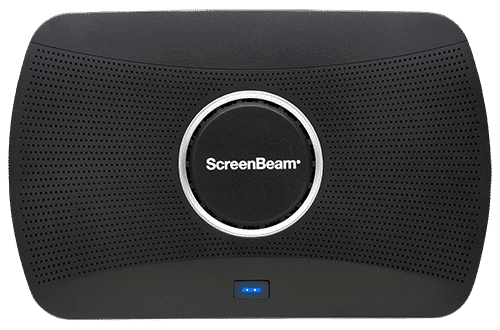
ScreenBeam 1100 Plus
Wireless Display Receiver
Our flagship wireless display solution for modern workplaces. 1100 Plus enables app-free content sharing from any device and supports all major video conferencing platforms. With flexible deployment and robust security, it’s a perfect fit for conference rooms, collaboration spaces, and hybrid environments.
Ideal for Business and Higher Education

ScreenBeam FLEX
Wireless Display Receiver
An affordable, easy-to-deploy wireless display solution that brings powerful collaboration capabilities to any room. It enables app-free screen sharing from any device and supports all major conferencing tools—perfect for creating productive meetings or learning spaces without the complexity or high cost.
Ideal for Higher Education, Small and Medium Businesses (SMB)
Let’s Build Smarter, Together
Let’s make every room smarter without making your job harder.
AV integrators are no longer just installers—they are strategic partners in the evolution of education. By aligning with these trends, you can deliver support-light, hybrid-ready classrooms that faculty love and IT teams trust.